Research Article
Book Review
Aim & Scope
Publication Content
Artuklu Humanities contains original scientific publications. All published articles, except editorial works, are subject to a double-blind peer review process.
Aim
The aim of the journal is to contribute to science by publishing high-quality publications of scientific importance. For this purpose, original research articles, review articles, translated articles, proceedings and book reviews in fields related to social sciences and humanities are published. Artuklu Humanities is an independent, double-blind refereed, open access and online journal that aims to publish articles in fields related to social sciences and humanities. Articles must describe original data that has not previously been published or submitted for publication elsewhere.
Scope
Manuscripts that are deemed to comply with the submission rules of Artuklu Humanities and the scope of the journal are sent to at least two referees who are experts in their field for scientific evaluation. Discussing its suitability, Artuklu Humanities Editorial Board members then take into account the comments of the referees regarding each submission. The final decision for all submitted articles belongs to the Editor-in-Chief. The Editorial Board of Artuklu Humanities undertakes to comply with the criteria of the Committee on Publication Ethics (COPE).
Subject Category:
Social Sciences and Humanities:
• Literature
• History
• History of art
• Educational Sciences
• Linguistics
• Philosophy
• Psychology
• Archaeology
• Anthropology
• Sociology
Field of Science: Social Sciences and Humanities
Key Words: Christianity, Judaism, Islam, Buddhism, Hinduism, Ottoman History, Seljuk, History of the Republic of Turkey, World History, European History, African History, Art History, Family Sociology, Sociology of Religion, Sociology of Education and Social Science, Economic Sociology, Communication Sociology, Sociology of Art, Sociology of Public Health, Political Sociology, Moral Philosophy, Philosophy of Religion, Islamic Philosophy, Philosophy of Science, Philosophy of Education, Philosophy of Ethics, Curriculum and Instruction, Educational Psychology, Private Education, Guidance, International Education, School Administration, Measurement and Evaluation, Developmental Psychology, Social Psychology, Cognitive Psychology, Clinical Psychology, Experimental Psychology, Psychometrics, Applied Psychology, Forensic Psychology, Educational Psychology, Health Psychology, Sports Psychology, Traffic Psychology, Positive Psychology, Political Psychology, Psychology of Religion, Republican Era Literature , Divan Literature, Folk Literature, Biography, Anthropology of Art, Anthropology of Law, Anthropology of Religion, Applied Anthropology, Developmental Anthropology, Lower Paleolithic Age, Middle Paleolithic Age, Upper Paleolithic Age.
Publication Language: Turkish, English, Arabic, Persian and Kurdish
Full Text Publication Language:
• Primary Language: Turkish
• Second Language: English, Arabic, Persian and Kurdish
Content Written in English and Latin Alphabet:
• Article Title: Turkish & English
• Author Name: Turkish (Latin Alphabet)
• Author Address: Turkish (Latin Alphabet)
• Keywords: Turkish & English
• Bibliography: Turkish (Latin Alphabet)
Full Text: Turkish (Latin Alphabet)
Article Applications
Submitted articles must comply with the purpose and scope of the journal. Original, unpublished articles that are not in the evaluation process in another journal and whose content and submission have been approved by each author are accepted for evaluation.
Readership
Target readership; They are professionals, experts, researchers, specialist and doctoral students in the field of social sciences and humanities, as well as students related to this field. It aims to contribute to the dissemination of continuous professional development and research culture.
Author Guidelines
Article Preparation
Language: Turkish, English, Arabi Persian and Kurdish
Article Types: Original Research Articles, Compiled Articles, Translated Articles, Papers and Book Reviews
However, we advise authors to be as concise as possible for dissemination of the work.
Article Format: MS Word
Image Format: JPEG at least 300 dpi
Citation Style: APA 7
Author Change: Processed only before the article is accepted. Authors should carefully review the list and order of authors before submitting their manuscript and must ensure the exact author list at the time of original submission.
Writing rules:
Manuscripts must be submitted in accordance with the writing and publication principles of Artuklu Humanities. Manuscripts that are not uploaded to the journal system in the specified format will not be evaluated.
• Page layout; It should be A4 size and written in a single column with margins set at 3.5 cm from the left, right, bottom and 3 cm from the top.
• Text; It should be written in MS Word format, Times New Roman font, 10 points, justified, with 1.15 line spacing. Main headings should be written in 12 point font and bold. If an explanation footnote is to be used, it should be written in Cambria font, 8 point. Paragraph indent should be 1 cm and spacing should be 6 pt.
• The main titles of the article in Turkish and English should clearly reflect the content of the article. Turkish and English main headings should be written in bold Times New Roman 12 point font. In the Turkish title, the first letter of each word should be capitalized, except conjunctions.
• Subheadings in the article should be given in accordance with the system in the APA 7th Edition.
• Articles must include introduction and conclusion sections.
• Summary of the article; It should clearly and concisely reflect the purpose, scope, method and result. The Turkish abstract and English abstract sections of the article should each be between 150-250 words.
• At least 3 (three) and at most 5 (five) keywords that reflect the integrity of the article should be determined.
• The word count of articles must be at least 3,000 and at most 8,000. Research notes should not exceed 2,500 words and other articles should not exceed 1,500 words.
• In text writing, the Turkish Language Association's Spelling Guide should be taken as basis in terms of spelling and punctuation.
• Adopts "Double-Blind Reviewer Practice" in article evaluations. For this reason, any information that would reveal the identity of the author should not be included in the footnotes. Studies whose author information is included in the Word text when the article is first uploaded to the system will not be evaluated.
• Authors who send articles to Artuklu Humanities must ensure that the submitted article has not been previously published anywhere else (except for publication as an abstract in conference proceedings books and as an academic thesis), and that after it is sent to the journal, it will be published elsewhere until the decision is notified to the authors. declares that it has not been sent anywhere.
• Any legal, legal, economic and ethical liability that may arise from the articles sent to Artuklu Humanities belongs to the authors, even if the article in question has been published. The journal does not accept any liability.
• All in-text and bibliographical citations should be given according to APA 7th Edition.
• Drawings, graphics, pictures and similar materials used in the articles must be in JPEG format. Visual materials and attachments should be sent via e-mail to itb@artuklu.edu.tr when necessary. Explanations about photographs, tables, graphs, figures and maps should be given according to APA 7th Edition rules.
• Applications are made via the dergipark address linked below: https://dergipark.org.tr/en/pub/ahu
Citation Style
Articles must be prepared according to APA 7th Edition.
Final Checklist
It is hoped that this list will be useful during the final check of the prepared article before it is uploaded to the journal system.
Make sure the following items are available:
1. Author information added.
• E-mail address
• Full mailing address
• Phone number
• ORCID
• Institution Information
2. All required files have been installed.
• Article Text
• Copyright Form
• Journal Checklist
• Ethics Committee Approval – Informed Consent Form (If applicable)
3. The article has been "spelling checked" and "grammar checked".
4. All references cited in the bibliography are cited in the text and vice versa.
Submit Article
In applications, the account of the corresponding author of the study should be used. All correspondence regarding the application is forwarded to the corresponding author via e-mail sent through the journal system.
When uploading the article file, make sure that this file does not contain any elements that would reveal the identity of the author due to the double-blind peer review process.
Files You Need to Install Separately:
1) Full Text of the Article
2) Copyright Notice Text
2) Journal Author-Article Checklist
3) Ethics Committee Approval – Informed Consent Form (If Available)
Author Guide
Duties and Responsibilities of Authors
Authorship and Contribution
Authorship should be limited to those who made significant contributions to the concept, design, execution, or interpretation of the work. All significant contributors should be listed as co-authors. If there are minor contributions to the work, such as language editing, they should be mentioned in the acknowledgments section. The corresponding author must ensure that all co-authors have seen and approved the final version of the manuscript and agreed to submit it for publication. Authors are expected to carefully review the list and order of authors before submitting their manuscript and to provide the exact author list at the time of original submission. The editor will only consider additions, deletions or rearrangements of authors after the manuscript has been submitted in exceptional cases. All authors must agree to any such additions, deletions or rearrangements. Authors take joint responsibility for the work.
Author Change Requests
Addition, deletion or rearrangement of author names in the author list can only be made before the article is accepted and only if approved by the journal Editor.
If such a change is requested, the Editor requests from the corresponding author (a) the reason for the change in the author list and (b) written confirmation (e-mail) from all authors stating that they agree to the inclusion. Only in exceptional cases will the editor consider additions, deletions or rearrangements of authors after the manuscript has been accepted.
Article Writing
Those who write original research articles should address the topic in an original way and with an objective discussion. The paper should contain sufficient detail and references to allow others to replicate the work. Fraudulent or knowingly false statements constitute unethical conduct and are unacceptable.
Originality
The author must provide assurance that the article is original, has not been published elsewhere before, and is not under consideration for publication elsewhere in another language.
Original Source Use and Attribution
Authors should ensure that they write completely original works and that if they use the work or words of others, this is properly cited. Information obtained privately, such as in conversations, correspondence or discussions with third parties, should not be used without the express written permission of the source.
Data Access and Preservation
Authors may be asked to provide research data supporting their article for editorial review and/or to comply with the journal's open data requirements. Authors should be prepared to provide public access to such data, if possible, and to retain such data for a reasonable period of time after publication. Our journal recommends uploading research data to TUBITAK's Aperta Portal.
Multiple and Simultaneous Broadcast
An author should not publish an article containing the same research in more than one journal. Submitting the same article to more than one journal at the same time is unethical behavior. An author should not submit a previously published article for consideration in another journal, unless it has been published in abstract form.
Publication of Studies Based on Surveys and Interviews
Ethics committee approval must be obtained for research conducted in all disciplines that require ethics committee permission, and this approval must be stated and documented in the article. In research requiring ethics committee permission, information about the permission (committee name, date and issue number) can be found in the method section, as well as on one of the first/last pages of the article; In case reports, information about signing the informed consent/consent form should be included in the article.
Conflict of Interest
Any financial or other interest that may cause conflict in one's work, significantly impair one's objectivity, or provide an unfair advantage to any person or organization. All sources of financial support received during the conduct of the research and preparation of the article and the role of the sponsors in the study should be disclosed. If there is no funding source, this should also be stated. Examples of potential conflicts of interest that should be disclosed include consultancies, salaries, grants. Potential conflicts of interest should be disclosed at the earliest possible stage.
Error Reporting
When an author discovers a significant error or inaccuracy in his published work, he must immediately notify the journal. It is also the author's obligation to cooperate in retracting or correcting the article if deemed necessary by the editor. If the editor or publisher learns from a third party that a published work contains an error, it is the author's obligation to cooperate with the editor, including notifying the editor.
Image Integrity
Enhancing, darkening, moving, removing or adding a particular feature in an image is unacceptable. Authors must comply with the policy for graphic images implemented by the journal.
Ethical Principles and Publication Policy
Principles of Publication Ethics
Publication Ethics can be defined as a self-regulatory mechanism that insists on honesty on the part of authors, reviewers and publishers to establish higher standards of editorial processing. Ethical standards for publication exist to ensure high-quality scientific publications, public confidence in scientific findings, and respect for people's opinions.
Honest researchers do not plagiarize.
Does not cite sources incorrectly.
They do not hide objections that they cannot refute.
They do not distort opposing views.
They do not destroy or hide data.
Peer-reviewed studies are studies that support and implement the scientific method. At this point, it is of great importance that all parties involved in the publication process (authors, readers and researchers, publisher, referees and editors) comply with ethical principles. Artuklu Humanities adheres to national and international standards on research and publication ethics. It complies with the Press Law, the Law on Intellectual and Artistic Works and the Directive on Scientific Research and Publication Ethics for Higher Education Institutions. Artuklu Humanities has adopted the International Ethical Publishing Principles published by the Committee on Publication Ethics (COPE), Directory of Open Access Journals (DOAJ) and Open Access Scholarly Publishers Association (OASPA). In addition, Türkiye undertakes to comply with the Decisions of the Editors' Workshop.
• Press Law (National Legislation)
• Law on Intellectual and Artistic Works (National Legislation)
• Higher Education Institutions Scientific Research and Publication Ethics Directive (National Legislation)
• Transparency and Best Practice Principles in Academic Publishing (International Criteria)
• Turkey Editors' Workshop Decisions (National Criteria) Re-Publication Re
Publication
Publication is the publication of the same article or substantially similar articles in more than one journal. The editor sends such article back without reviewing it. After this, the editor may impose an embargo for a certain period of time on the author who attempts to re-publish, may announce this situation to the public in the journal in which the author has previously published (perhaps as a simultaneous announcement with the editor of the journal that published the previous article), or may apply all of these measures together.
Sending the same article to more than one journal simultaneously
Authors cannot submit the same article to more than one journal at the same time. If the editor learns of possible simultaneous submission, he reserves the right to consult with the other editor(s) receiving the manuscript. In addition, the editor may return the article without reviewing it or reject it without taking the reviews into account, or may make this decision by discussing it with other relevant editor(s) and may decide not to accept article applications from authors for a certain period of time. They can also write to the authors' employers or implement all of these measures together.
Control to Prevent Plagiarism
Presenting the ideas, methods, data, applications, writings, figures or works of others as one's own work, in whole or in part, without citing their owners in accordance with scientific rules.
Artuklu Humanities scans all submitted articles to prevent plagiarism. The studies submitted for review are checked for plagiarism using iThenticate software. The similarity rate is expected to be less than 20%. The main criterion in the similarity rate is that the author complies with the rules of citation and quotation. Even though the similarity rate appears to be 1%, if citation and quotation are not made properly, plagiarism may still occur. In this respect, citation and quotation rules should be known by the author and applied carefully.
Plagiarism, duplication, false authorship/denied authorship, research/data fabrication, article slicing, publication by slicing, copyright infringement, and hiding conflict of interest are considered unethical behavior. All articles that do not comply with accepted ethical standards are removed from publication. This includes articles containing possible irregularities or improprieties detected after publication.
Forgery
Producing data that is not based on research, editing or changing the presented or published work based on unreal data, reporting or publishing these, and pretending that a research has not been done.
Falsifying research records and obtained data, presenting methods, devices and materials that were not used in the research as if they were used, not taking into consideration data that are not suitable for the research hypothesis, tampering with data and/or results to fit the relevant theory or assumptions, producing research results in line with the interests of the people and organizations receiving support. To distort or shape.
Protection of Participants' Personal Data
Artuklu Humanities requires that all research involving personal or sensitive data or material regarding human participants that is not legally available to the public be subject to formal ethical review.
Handling Allegations of Research Misconduct
Artuklu Humanities adheres to COPE's Ethical Toolkit for Successful Editorial. Editors of Artuklu Humanities; will take action to prevent the publication of articles in which plagiarism, citation manipulation, data falsification, data fabrication and other research misconduct occur. Under no circumstances will the editors of Artuklu Humanities knowingly allow such abuse to occur. If the editors of the Artuklu Humanities become aware of any allegations of research misconduct relating to an article published in their journal, they will follow COPE's guidelines regarding the allegations.
Ethical Violation Notifications
When readers notice a significant error or inaccuracy in an article published in Artuklu Humanities, or have any complaints regarding editorial content (plagiarism, duplicate articles, etc.), they can email itb@artuklu.edu.tr. You can make a notification by sending an e-mail. We welcome applications as they will provide opportunities for us to develop, and we respond quickly and constructively.
Correction, Retraction, Expression of Concern Editors
may consider publishing a correction if minor errors are identified in the published article that do not affect the findings, interpretations, or conclusions . Editors should consider retracting the manuscript in cases of major errors/violations that invalidate the findings and conclusions. If there is a possibility of misuse of research or publication by the authors; If there is evidence that the findings are unreliable and the authors' institutions have not investigated the incident, or if the potential investigation appears unfair or inconclusive, editors should consider publishing an expression of concern. COPE guidelines regarding corrections, retractions or expressions of concern are taken into account.
Publication of Studies Based on Surveys and Interviews
Artuklu Humanities, in order to create ethical assurance in scientific periodical publishing, publishes the "Code of Conduct and Best Practice Guidelines for Journal Editors" and "Code of Conduct for Journal Publishers" of the Committee on Publication Ethics (COPE). adopts the principles. In this context, the following points must be followed in studies submitted to the journal:
1) For research conducted in all branches of science that require ethics committee permission (ethics committee approval must be obtained, this approval must be stated and documented in the article.
2) For research that requires ethics committee permission, information about the permission (board name) , date and issue number) in the method section, also on one of the first/last pages of the article; In case reports, information about signing the informed consent/consent form should be included in the article.
Special Issue Publishing Policy
A special issue may be published in our journal once a year upon the request of the Editorial Board. Articles submitted for inclusion in the special issue are first subjected to editorial preliminary review. It is then examined for compliance with the journal's spelling rules and similarity scanning is performed to prevent plagiarism. After these stages, it is taken into the peer evaluation process where the double-blind model is used.
Obligation of Editorial Confidentiality
The editors of Artuklu Humanities treat all submitted articles as confidential documents; This means that they will not disclose information about a manuscript to anyone without the authors' permission. During the article review process, the following people can access the articles: Editors, Referees, Editorial Board Members. The only time details about a manuscript may be passed on to a third party without the authors' permission is if the editor suspects serious research misconduct.
Allegations-Suspicions of Scientific Misconduct
There are different definitions of scientific misconduct. We address these issues on a case-by-case basis, while Artuklu Humanities follows the guidance established by major publication ethics bodies. If the editor suspects or alleges an ethical violation, they are obliged to take action. This duty extends to both published and unpublished articles. The editor should not simply reject articles raising concerns about possible misconduct. He/she is ethically obliged to follow up on alleged cases. The editor should follow COPE flowcharts when appropriate. Editors should first seek a response from those suspected of misconduct. If they are not satisfied with the response, they should ask the relevant employer or organisation to investigate. The editor should make all reasonable endeavours to ensure that an appropriate investigation into the alleged misconduct is carried out; if this fails, the editor should make all reasonable attempts to insist on a resolution to the problem. This is an arduous but important task.
Artuklu Humanities follows COPE's Ethical Toolkit for a Successful Editorial Office. The editors of Artuklu Humanities will take measures to prevent the publication of manuscripts in which plagiarism, citation manipulation, data falsification, data fabrication, and other research misconduct have occurred. In no case will Artuklu Humanities or its editors knowingly allow such misconduct to occur. In the event that the editors of Artuklu Humanities become aware of any allegations of research misconduct related to a paper published in their journal, they will follow COPE's guidelines regarding allegations.
Reviewers should notify the Editor if they suspect research or publication misconduct. The Editor is responsible for taking necessary action in accordance with COPE recommendations.
Artuklu Humanities is committed to following the COPE flowcharts when faced with allegations of misconduct on the following or similar issues.
• What to do when republication is suspected
• What to do when plagiarism is suspected
• What to do if fabricated data is suspected
• Requests for change of authorship
• What to do if an undisclosed conflict of interest is suspected
• What to do if unfair or gift authorship is suspected
• What to do when an ethical problem is suspected in an article
• What to do when the suspicion of ethical violation is directly notified by e-mail, etc.
• What to do when a suspected ethical violation is announced via social media
Complaint Procedure
This procedure is valid for complaints regarding the content, procedures or policies that are the responsibility of Artuklu Humanities or our editorial staff. Complaints can provide an opportunity and incentive for improvement and we aim to respond quickly, courteously and constructively.
The complaint must relate to content, procedures or policies that are the responsibility of Artuklu Humanities or our editorial team. Complaints should be emailed directly to itb@artuklu.edu.tr and will be treated confidentially. The editor responds to complaints immediately. The editor follows the procedure outlined in the COPE flowchart regarding complaints.
Complaints are reviewed by the relevant member of the editorial team and, if not resolved, the following processes are followed:
• If this initial response is deemed inadequate, the complainant may request that their complaint be escalated to a more senior member of the journal.
• If the complainant is dissatisfied, complaints may be forwarded to the editor-in-chief.
• A full response will be given within two weeks if possible.
COPE publishes a code of practice for editors of scientific journals. This will facilitate the resolution of disputes with editors, journals and publishers, but can only be submitted after the journal's own complaints procedures have been exhausted.
Objection Process We welcome
serious objections to evaluations made by editors and reviewers . If you think we rejected your article because we misunderstood its scientific content, please send an objection message to our editorial team at itb@artuklu.edu.tr . Do not try to submit a revised version of your article at this stage. If, after reading your objection letter, we find that your objection is justified, we may invite you to submit a revised version of your article. Thus, your work will be re-sent to the external referee process. Please include as much detail as possible in the appeal letter. Finally, we can only consider one objection per article, so please take the time and effort to write the letter in detail to clearly outline your objection – you have one chance, so make good use of it. We have found that prolonged deliberation on rejected manuscripts is often unsatisfactory for both authors and editors, so we do not process multiple objections for the same work. Conflicts
Conflicts of Interest
A conflict of interest occurs when professional judgment regarding a primary interest may be influenced by a secondary interest (such as financial gain or personal rivalry). We believe that we need to know the competing interests of authors to make the best decision about how to handle a paper, and that readers need to know about them if we publish the paper.
Any financial or other interest that may cause conflict in one's work, significantly impair objectivity, or provide an unfair advantage in favor of any person or organization. All sources of financial support received during the conduct of the research and preparation of the article and the role of the sponsors in the study should be disclosed. If there is no funding source, this should also be stated. Examples of potential conflicts of interest that should be disclosed include consultancies, salaries, grants. Potential conflicts of interest should be disclosed at the earliest possible stage.
Artuklu Humanities has an established process for handling submissions from editors, staff, or editorial board members to ensure unbiased review. Such submissions are primarily directed to other journals. If this is not possible, the post owner's position in the journal will be suspended. These submissions are reviewed in a double-blind process.
The editor should not be involved in decisions regarding articles written by himself or his family members. Additionally, such work must be subject to all the journal's usual procedures. The editor must follow COPE guidelines regarding disclosure of potential conflicts of interest by authors and reviewers.
Principles of Research Ethics
• Artuklu Humanities observes the highest standards in research ethics and adopts the international principles of research ethics defined below. It is the responsibility of the authors to ensure that the articles comply with ethical rules.
• The principles of integrity, quality and transparency must be ensured in designing the research, reviewing the design and conducting the research.
• The research team and participants discussed the purpose, methods, and potential anticipated uses of the research; They should be fully informed about the requirements and, if any, risks of participating in the study.
• Confidentiality of information provided by research participants and confidentiality of respondents must be ensured. Research should be designed to protect the autonomy and dignity of participants .
• Research participants must take part in the research voluntarily and must not be under any pressure.
• Harm to participants must be avoided. The research should be planned in a way that does not put participants at risk.
• There should be clarity regarding research independence; If there is a conflict of interest, it should be stated.
• In experimental studies with human subjects, written informed consent must be obtained from participants who decide to participate in the research. The consent of the legal guardian of children and those under guardianship or with a certified mental illness must be obtained.
• If the study will be carried out in any institution or organization, approval must be obtained from this institution or organization.
• In studies involving a human element, it should be stated in the "method" section that "informed consent" was obtained from the participants and ethics committee approval was obtained from the institution where the study was conducted.
Price Policy
There is no fee for the publication of articles in the journal and the execution of article processes.
No processing fee or submission fee is charged under any name for articles sent to the journal or accepted for publication.
Artuklu Humanities Journal does not accept sponsorship or advertising due to its publication policies.
All expenses of Artuklu Humanities are covered by the publisher.
Indexes
Citation Indexes





Other Indexes





Journal Boards
EDITOR

Adnan Oktay, Professor Dr., entered the Department of Turkish Language and Literature, Faculty of Letters, Istanbul University in 1996. He graduated from this department in 2000. He began his master's degree with a thesis in the Department of Turkish Language and Literature, Institute of Social Sciences, Istanbul University, graduating with a thesis titled "Social, Cultural and Historical Texture in the Diwan of İshak Çelebi from Skopje." In 2009, he began working as a research assistant in the Department of Turkish Language and Literature, Faculty of Art, Mardin Artuklu University. In the fall of 2009, he began his doctoral program in the Department of Turkish Language and Literature, Institute of Educational Sciences, Dicle University, graduating with a thesis titled "Nabi's Munshaat: Analysis-Text." He currently serves as a faculty member in the Department of Turkish Language and Literature, Faculty of Art, Mardin Artuklu University. adnanoktay@artuklu.edu.tr
EDITOR ASSISTANT

Asst. Prof. Dr. Mitat Çekici enrolled in the Department of Persian Language and Literature at the Faculty of Letters, Erzurum Atatürk University in 2006 and graduated in 2010. He continued his education in the Master’s program with thesis at the Institute of Social Sciences, Department of Persian Language and Literature at the same university, from which he graduated in 2012. Between 2014 and 2018, as an official scholarship holder of the Ministry of National Education, he pursued his doctoral studies at the University of Tehran (Iran) in the Department of Persian Language and Literature on behalf of Mardin Artuklu University. Since 2019, he has been serving as a faculty member in the Department of Persian Language and Literature at the Faculty of Letters, Mardin Artuklu University.
EDITORYAL BOARD








 Web
Web
He was born in 1976 in Herne, Germany. In 2009, he completed his undergraduate studies in Oriental Studies, Islamic Studies, and Religious Studies at Ruhr University Bochum. In 2011, he obtained his master’s degree in Islamic Studies from the same university. In the same year, he began his doctoral studies at Goethe University Frankfurt.
Between 2013 and 2015, he worked as an assistant and lecturer at Justus Liebig University in Gießen. In 2016, he completed his doctoral dissertation entitled “Die theologischen, juristischen und sozialen Dimensionen der Sünde im Koran – The Theological, Legal, and Social Dimensions of Sin in the Qur’an” with the distinction summa cum laude.
Since 2017, he has been working at DITIB-ZSU as the Head of the Translation and Editorial Unit. Among the works he has contributed to as an editor and translator is the seven-volume “Islam Through Hadiths”, published in German by the Presidency of Religious Affairs (Diyanet İşleri Başkanlığı) and Ditibverlag (DITIB-ZSU e.v.).
Including his doctoral thesis, he has published four books. He has also authored numerous articles in both German and Turkish, which have appeared in academic and intellectual journals as well as in contemporary media outlets. He continues his writing and research activities.
He is married and the father of three daughters.
Göksu graduated from the Department of Computer Education at Mersin University, Tarsus Technical Education Faculty, in 2007. Following graduation, Göksu served as an Information Technologies Teacher from 2007 to 2009. Göksu furthered their academic journey by completing a master's degree in Computer and Instructional Technologies Education (BÖTE) at Fırat University in 2012, and subsequently earned a doctoral degree in the same field from Atatürk University in 2016. From 2009 to 2016, Göksu served as a Lecturer in the Computer Technologies department at Midyat Vocational School. In 2016, Göksu joined Mardin Artuklu University as an Assistant Professor in the Department of Educational Sciences, Division of Educational Programs and Instruction. Göksu was awarded the title of Associate Professor in BÖTE in 2021 and continues to serve in the same department. Currently, Göksu teaches "Instructional Technologies" at the undergraduate level, and "Scientific Research Methods," "Academic Writing Techniques," and "Technology Integration in Education" at the graduate level. Göksu's research interests encompass a broad range of topics, including educational technologies, instructional design, distance education, mobile learning, virtual reality, digital games, and digital media.
FIELD EDITORS

Hakan Gülerce completed his master's degree at Istanbul University, Department of Social Structure-Social Change in 2012 with his thesis titled “The Role of Editing in the Development of Social Sciences and a Sociological Study on Academic Journal Editors”. He graduated from the Department of Sociology of the same university in 2017 with his doctoral thesis titled “The Reproduction of Christianity in the Encounter with Modernity”. In 2018, Gülerce started to work as an Assistant Professor in the Department of Sociology at Harran University and continued her postdoctoral studies in the fields of migration, social cohesion, youth studies, modernity and religion.
Gülerce received the title of associate professor in the fields of Sociology of Migration and Sociology of Religion in 2022. Gülerce, who is the director of Harran University Migration Policies Application and Research Center, has been and continues to be the coordinator of various projects on migration, forced migration, Syrians in Turkey and social cohesion in this center.
Gülerce, who served as the secretary general of the International Federation of Social Science Organizations between 2012-2019, assumed the presidency between 2019-2023. He is currently a board member of the same organization.
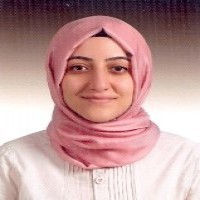
Deniz Işıker Bedir, Mardin Artuklu Üniversitesi Psikoloji Bölümünde Dr. Öğr. Üyesi olarak çalışmaktadır. Lisans eğitimini Yakın Doğu Üniversitesi Psikoloji Bölümünde, Yüksek Lisans eğitimini İstanbul Bilgi Üniversitesi Kültürel İncelemeler alanında, Doktora eğitimini ise İstanbul Üniversitesi-Cerrahpaşa Adli Tıp Enstitüsü Sosyal Bilimler Anabilim Dalında “Yaşlılıkta İstismar, İhmal ve Başa Çıkma Stratejileri” başlıklı teziyle tamamlamıştır. Yaşlılık, yaşlı istismarı, adli psikoloji ve travma gibi alanlarda çalışmalar yapmaktadır.
Deniz Işıker Bedir’in 28 Şubat’ın Psikolojik Etkileri ve Yaşlı İstismarı ve İhmali adlı iki kitabı bulunmaktadır. Ayrıca Psikoloji Tarihi başlıklı kitabın editörlüğünü üstlenmiştir.
TURKISH SPELLING AND LANGUAGE EDITORS
ENGLISH SPELLING AND LANGUAGE EDITORS
KURDISH SPELLING AND LANGUAGE EDITORS

ARABIC SPELLING AND LANGUAGE EDITORS
PERSIAN SPELLING AND LANGUAGE EDITORS

TECHNICAL EDITOR
LAYOUT
SECRETARIAT
He completed his undergraduate education at the Department of Psychology at Fatih Sultan Mehmet Vakıf University. He completed his master's degree at the Department of Philosophy at İstanbul 29 Mayıs University. He is currently pursuing his doctoral studies at the Department of Philosophy at Istanbul University. He continues his research in the fields of logic, philosophy of language, and metaphysics.


Artuklu Humanities is licensed under a Creative Commons Attribution-NonCommercial 4.0 International License (CC BY NC).